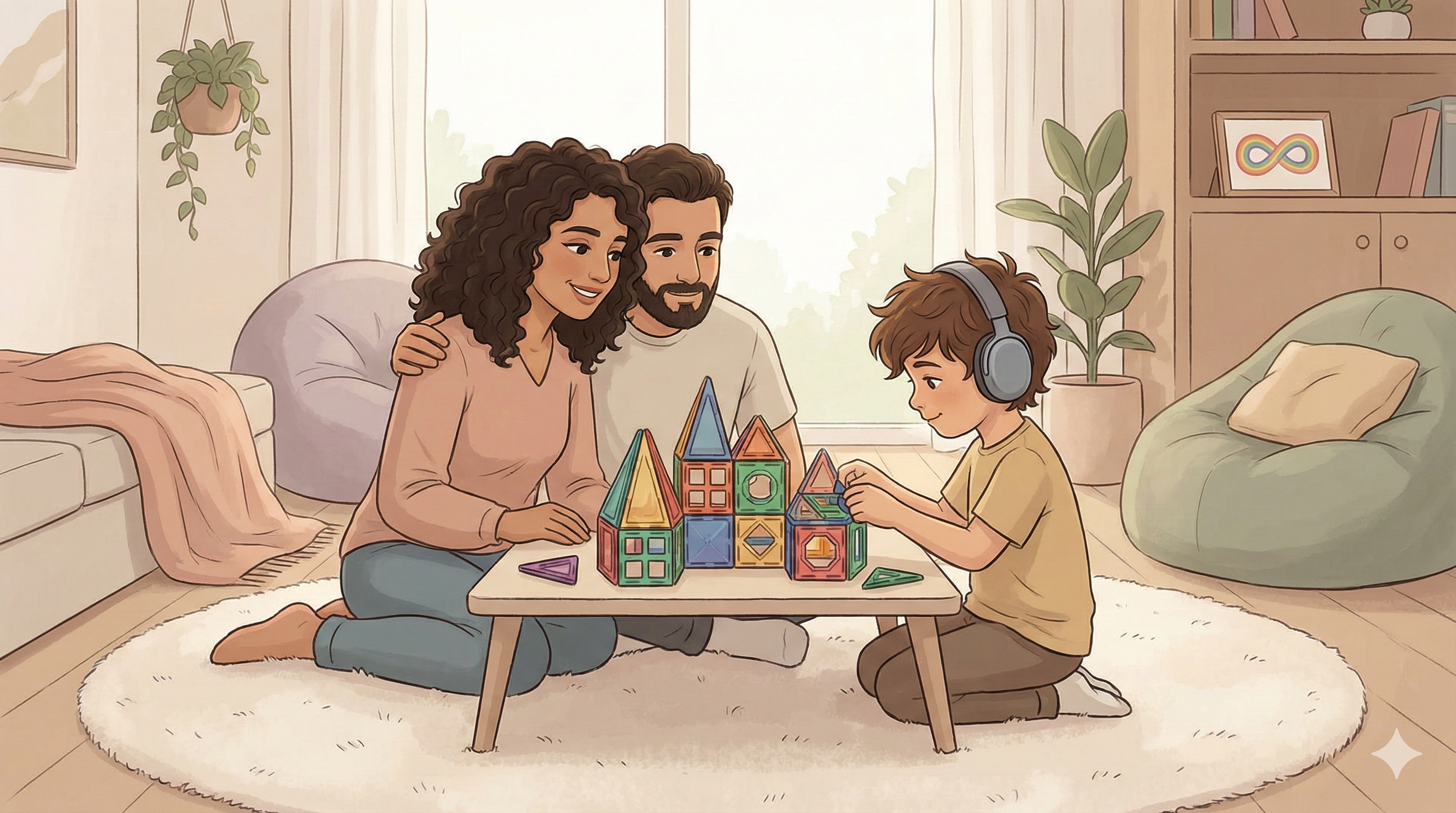
When their son Jacob was diagnosed with autism at age 5, Mark and Helen faced the challenge of helping everyone in his life understand his needs. This is their story of how the Autism Passport changed things for their family.
Before the Diagnosis
Looking back, the signs were always there. Jacob was slow to speak, preferred playing alone, and had intense interests that consumed him entirely. Trains were his world - he could name every type of locomotive, recite timetables, and draw detailed track layouts from memory.
But getting a diagnosis took years. GP appointments, referrals, waiting lists, assessments. By the time we finally got the words "autism spectrum disorder," Jacob was 5 and about to start school.
We felt relief at having an answer, but also daunting uncertainty about what came next.
The Communication Challenge
The hardest thing after Jacob's diagnosis wasn't understanding autism - there are plenty of books and websites for that. It was explaining Jacob to everyone else.
Every new situation required starting from scratch. New teachers needed to understand why Jacob couldn't cope with sudden changes to the routine. Healthcare appointments were stressful because we had to explain his sensory sensitivities to staff who'd never met him. Even family members struggled to understand why certain things upset him.
We created documents - pages of information about Jacob's needs, his triggers, his calming strategies. But they were inconsistent. Sometimes we'd forget important details. Sometimes the person we gave them to wouldn't read them. We were constantly explaining, advocating, fighting for basic understanding.
It was exhausting.
Finding the Passport
Our community paediatrician told us about the Autism Passport during a routine review. "It's a digital document," she explained. "You fill it in with information about Jacob, and then you can share it with anyone who needs to understand him."
We'd tried other tools before - social stories, visual schedules, various apps. We were sceptical that this would be different.
But when we saw the passport, something clicked. It was structured perfectly for what we needed. Sections for sensory preferences, communication styles, calming strategies, things that cause distress. There was space to include photos, Jacob's own voice, specific details that made him unique.
"This is Jacob," we thought. "This actually captures who he is."
Building Jacob's Passport
We spent an evening filling in the passport together. Some sections were easy - his strengths (amazing memory, kind heart, encyclopedic knowledge of trains), his interests, his daily routines. Others were harder - writing down his triggers felt uncomfortable, like we were defining him by his challenges.
But our paediatrician had given us good advice: "Think about what you wish everyone knew about Jacob. The things you're tired of explaining. The things that would make his life easier if people just understood."
So we wrote:
- That he takes things literally, so sarcasm and idioms confuse him
- That he needs warning before transitions, ideally with a visual countdown
- That he covers his ears not to be rude, but because noise physically hurts
- That he may not look at you, but he's still listening
- That when he talks about trains for too long, redirecting kindly works better than telling him to stop
We included his words too. Jacob dictated a section about what makes him happy and what he finds hard. Reading his words now, they're heartbreaking and beautiful: "I find hard when people laugh and I don't know why. I like when people are patient with me."
Sharing It
The first real test was Jacob's new school. He was moving from infant to junior school, and we were terrified. New building, new teachers, new classmates, new routines. Every transition before had been difficult.
A week before term started, we shared the passport with his new teacher, the SENCO, and the teaching assistant who'd be supporting him. We asked them to read it before Jacob started.
On his first day, we were prepared for disaster. Pick-up time came, and Jacob walked out smiling. "Mrs Patterson knew I like trains," he said. "She let me tell her about the Flying Scotsman."
Later, his teacher told us: "The passport was invaluable. I felt like I knew Jacob before I met him. I knew to give him extra time for transitions, to use visual schedules, to let him decompress after assembly. It made everything smoother."
The difference was remarkable. Jacob's transition to junior school was the best he'd ever had.
Healthcare Made Easier
If school was challenging before the passport, healthcare appointments were even worse. Jacob hated the unpredictability of waiting rooms, the strange sounds and smells, the physical examinations he found invasive.
We dreaded taking him to the GP, let alone the hospital. Every appointment required extensive preparation, and they still often ended in meltdowns.
After we got the passport, we started sharing it with healthcare providers before appointments. The results amazed us.
At his first dental appointment after getting the passport, the dentist had clearly read it. She dimmed the lights, explained every step before doing it, let Jacob watch a train video during the examination. He sat through the whole thing calmly - a first.
When Jacob needed blood tests at the hospital, we shared the passport in advance. The phlebotomist knew to let him watch what was happening (he finds it easier than not knowing), to use a countdown, to let him squeeze his stress ball. It wasn't easy, but he managed it without the tears and terror of previous attempts.
"I wish every patient had something like this," the phlebotomist told us. "It makes our job so much easier when we understand what someone needs."
Beyond Medical Settings
What surprised us most was how useful the passport became beyond healthcare and education.
When Jacob joined Cubs, we shared it with the scout leader. He now gets extra support during noisy activities and can step out to the quiet room when overwhelmed.
When we hired a new babysitter, we shared the passport. She understood Jacob within minutes in a way that would have taken months of explanation otherwise.
When Jacob went to a birthday party - something that had always been difficult - we asked the hosting parent if they'd mind reading his passport. They made small adjustments: a quiet corner he could retreat to, a heads-up before the "surprise" moments, no pressure to join in every activity. Jacob stayed the whole time.
The passport didn't change Jacob. It helped the world understand him.
What Jacob Thinks
Jacob is 9 now and increasingly aware of his autism. We asked him what he thinks about the passport.
"It explains me so I don't have to," he said. "Explaining is tiring. The passport does it for me."
He's started taking ownership of it, suggesting updates when things change. Last month, he asked us to add that he now likes being called "Jake" at school. It's small, but it matters to him.
Our hope is that as he grows older, the passport will grow with him. By the time he's a teenager, we want him managing it himself - updating his preferences, sharing it when he chooses. It's part of teaching him to advocate for himself.
The Difference It's Made
Before the passport, we spent enormous energy explaining Jacob to the world. We were translators, constantly interpreting his behaviour to people who didn't understand.
Now, we can just share the passport. It speaks for us. It speaks for Jacob.
That doesn't mean everything is easy. Jacob still has difficult days. Autism is still a daily reality. Some situations are still challenging.
But the passport has reduced so much friction. Fewer misunderstandings. Fewer meltdowns caused by other people's expectations. Fewer times we have to say, "Actually, he needs..." because people already know.
It's given us space to breathe. And it's given Jacob the gift of being understood.
To Other Parents
If you're considering an Autism Passport for your child, here's what we'd say:
Be honest in it. Don't minimise challenges or exaggerate strengths. The goal is for people to understand your child as they actually are.
Include your child's voice. Even if they're young, include their words, their perspective, their preferences. It makes the passport more powerful.
Share it proactively. Don't wait for things to go wrong. Share it before appointments, before new activities, before transitions.
Update it regularly. Children change. Make sure the passport changes with them.
Remember it's a tool, not a solution. The passport helps communication, but it doesn't replace the need for appropriate support and understanding.
Looking Forward
Jacob is thriving in ways we couldn't have imagined when he was first diagnosed. He has friends who accept him, teachers who understand him, and a family who cherishes him exactly as he is.
The Autism Passport didn't cause all of that. But it helped. It opened doors by helping others understand what Jacob needs to flourish.
And that, in the end, is all we ever wanted for him.
If you'd like to learn more about the Autism Passport or share your family's experience, please contact us.
Mark and Helen (as told to TMA)
Parents
Mark and Helen (as told to TMA) is dedicated to improving healthcare outcomes for children with long-term conditions.