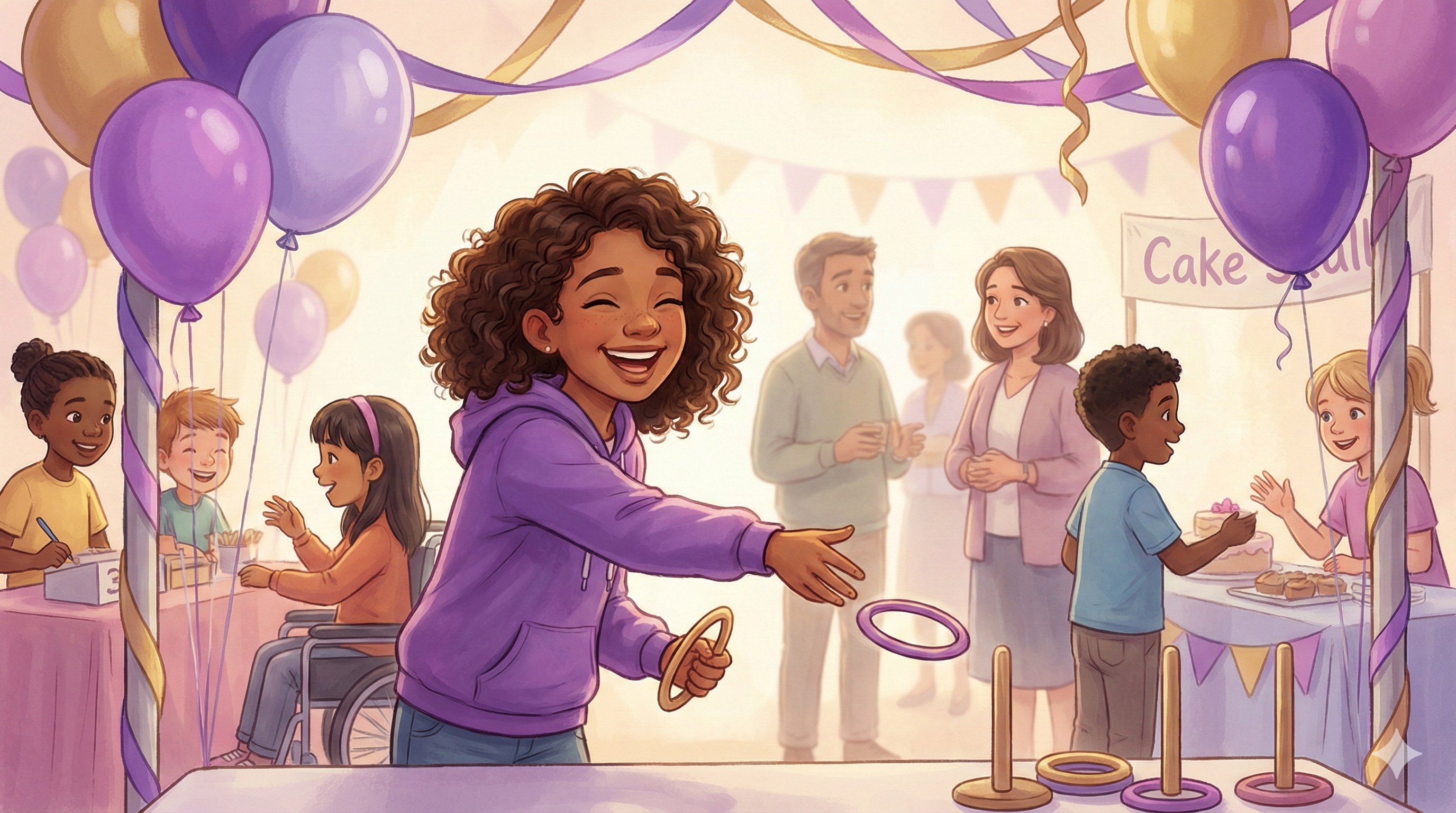
Emma was diagnosed with epilepsy at age 6. Now 11, she manages her condition with confidence, supported by her digital Epilepsy Passport. This is her family's story.
The Diagnosis
When Emma had her first seizure, we were terrified. She was playing in the garden one minute, and the next she was on the ground, her body rigid, her eyes rolled back. I remember screaming for my husband, calling 999, feeling utterly helpless.
The weeks that followed were a blur of hospital appointments, EEGs, MRI scans, and consultations. When the neurologist finally told us Emma had epilepsy, I felt strangely relieved to have an answer, but also overwhelmed by what it meant.
Suddenly, we had medication schedules to remember, warning signs to watch for, emergency protocols to learn. And then there was the question of how to tell everyone else - her school, her grandparents, the parents of her friends.
Living with Uncertainty
The hardest part of those early months was the uncertainty. Emma's seizures weren't predictable - some months she'd have several, other times she'd go weeks without one. We never knew when the next one would happen.
I became hyper-vigilant. I watched her constantly, analysed her every movement, barely let her out of my sight. I stopped letting her go to friends' houses for playdates. School trips were out of the question. Swimming? Absolutely not.
Emma started to notice. "Why can't I go to Sophie's party?" she'd ask. "Why do you always have to come too?" I was trying to protect her, but I was also limiting her life.
Discovering the Passport
Our epilepsy nurse mentioned the digital passport during a clinic appointment about a year after Emma's diagnosis. She showed us what it looked like on her phone - this clear, professional document with all of Emma's information organised perfectly.
"It's like a care plan," she explained, "but digital. You can share it with anyone who needs it - school, family, activity leaders. And it's always in your pocket."
I was sceptical at first. We already had a paper care plan. How would this be different?
But then she showed us the seizure action plan - step-by-step instructions with pictures showing what to do if Emma had a tonic-clonic seizure. "Imagine handing this to a birthday party host," she said. "Or a swimming instructor."
That's when I started to see the possibilities.
Changing Everything
Getting the passport set up was easy - our epilepsy nurse did most of it during a clinic appointment, and I added some extra details at home. Within a day, we had this comprehensive document that explained everything about Emma's epilepsy in clear, simple terms.
The first real test was Emma's school. I'd been sending them updated paper care plans every few months, but I was never sure the right people actually read them. When I shared the passport link with the school, the response was completely different.
The SENCO called me that afternoon. "This is brilliant," she said. "I've shared it with Emma's teacher, the lunchtime supervisors, and the office staff. Everyone knows where to find it."
Three weeks later, Emma had a seizure at school - her first one there. The lunchtime supervisor who was with her followed the passport instructions exactly. She stayed calm, protected Emma's head, timed the seizure, called for help at the right moment. When I arrived, everything was under control.
"I just followed what the passport said," the supervisor told me. "It was all there."
A New Kind of Freedom
After that, things started to change. I began to trust that other people could manage Emma's seizures. I wasn't the only one who knew what to do anymore.
Emma went to her first sleepover. I shared the passport with her friend's mum beforehand, answered a few questions, and then - this was the hard part - I let her go. I barely slept that night, but Emma had a wonderful time. No seizures. Just a normal sleepover.
Then came swimming lessons. I'd resisted for years, terrified of what could happen. But the swimming instructor reviewed the passport, asked sensible questions, and put measures in place. Emma now swims twice a week. She's working toward her 200-metre badge.
Last summer, Emma went on her school residential trip. Three nights away, outdoor activities, new environments. A year earlier, I would have said absolutely not. But with the passport shared with all the staff, and clear protocols in place, I said yes.
She came back exhausted, exhilarated, and full of stories. "It was the best week ever," she told me.
Emma Takes Over
Something shifted when Emma turned 10. She started asking more questions about her epilepsy. Why did it happen? What did the medicines do? What should she do if she felt a seizure coming?
Our epilepsy nurse suggested Emma could have her own access to the passport. At first, she just liked looking at it - "That's my brain scan!" she'd say, pointing at the image. But gradually, she started understanding more.
Now, at 11, Emma is remarkably knowledgeable about her condition. She can explain her medication to new teachers. She knows her triggers and how to avoid them. She understands what a seizure looks like and what to do afterwards.
When she started secondary school last September, she took the lead in talking to her new teachers. "I have epilepsy," she told them confidently. "I have a passport that explains everything. My mum can share it with you."
I stood there trying not to cry. My little girl, who I'd once thought would never have a normal life, was taking charge of her health.
What It Means to Us
The passport hasn't cured Emma's epilepsy. She still has seizures, still takes medication every day, still has clinic appointments every few months. Epilepsy is still part of our lives.
But it's not the only part anymore. Emma plays football, learns piano, goes to sleepovers, swims, and goes on school trips. She has friends, hobbies, and dreams for the future. She's not "the girl with epilepsy" - she's Emma, who happens to have epilepsy.
For me, the passport gave me something I hadn't felt since her diagnosis: confidence. Confidence that other people could care for Emma safely. Confidence that she would be okay even when I wasn't there. Confidence to step back and let her live.
Advice for Other Families
If you're where we were five years ago - newly diagnosed, overwhelmed, frightened - here's what I'd say:
-
Get a passport if you can. Ask your epilepsy nurse or consultant. It won't solve everything, but it makes so many things easier.
-
Share it widely. The more people who understand your child's epilepsy, the safer they are. Don't be embarrassed to share it.
-
Let your child learn. As they grow, involve them in their care. The passport is a great tool for teaching them about their condition.
-
Give yourself permission to step back. Your child needs to learn to manage without you always there. The passport helps make that possible.
Looking Forward
Emma is 11 now. In a few years, she'll be a teenager, dealing with all the usual teenage challenges plus a chronic health condition. I know there will be difficult times ahead.
But I also know she has a strong foundation. She understands her epilepsy. She can communicate about it confidently. She has tools - including her passport - to help her manage.
Whatever comes next, she's ready. And so am I.
If you'd like to learn more about the Epilepsy Passport or share your family's story, please get in touch.
Emma's Mum (as told to TMA)
Parent
Emma's Mum (as told to TMA) is dedicated to improving healthcare outcomes for children with long-term conditions.