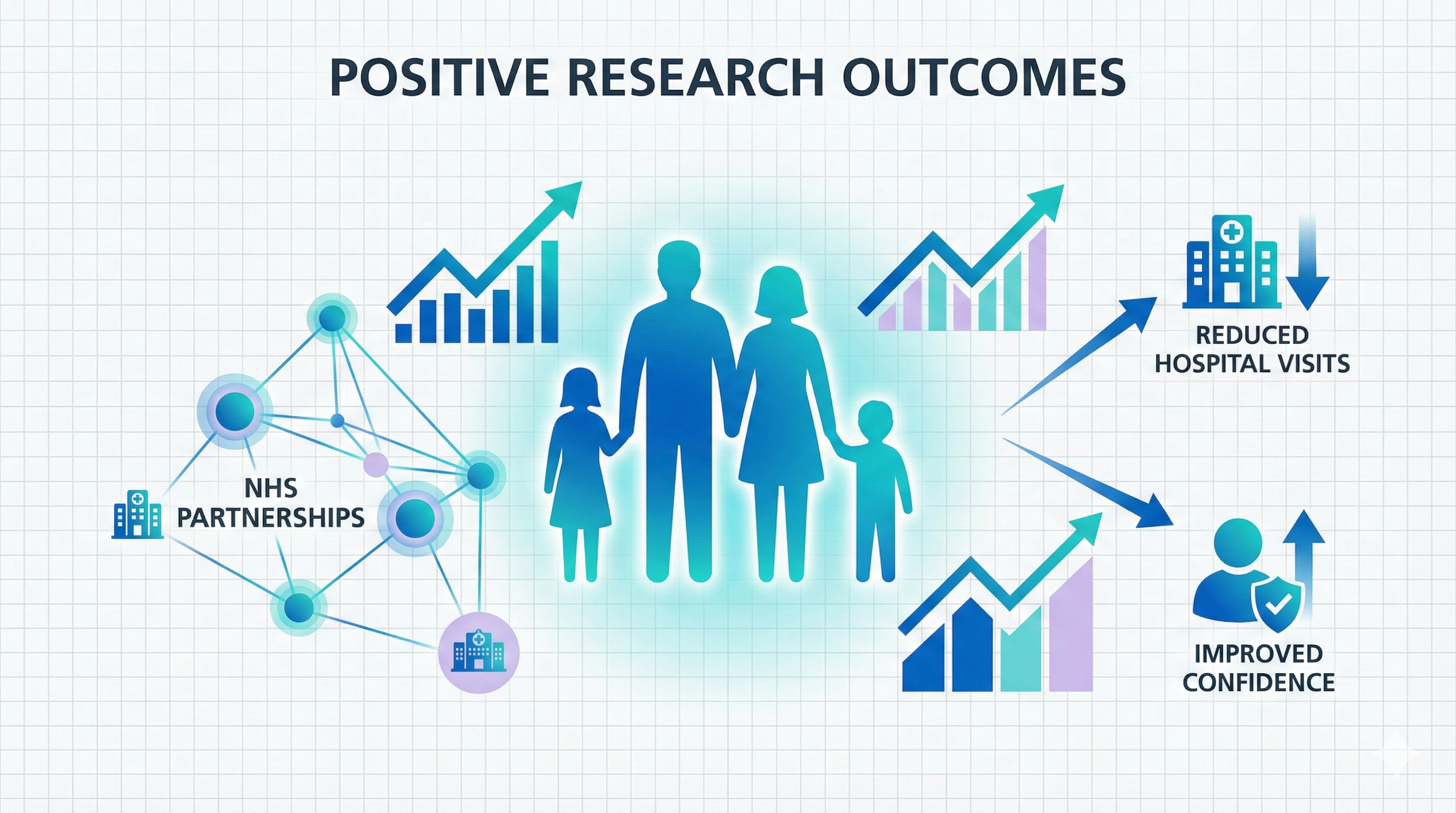
As commissioners and clinicians evaluate digital health interventions, understanding the evidence base is crucial. This article summarises the research supporting digital health passports and presents outcomes data from TMA implementations across the NHS.
The Case for Digital Health Passports
Traditional paper-based care plans have served healthcare well, but they come with significant limitations:
- Accessibility - Paper documents can be lost, forgotten, or inaccessible when needed most
- Currency - Paper plans become outdated quickly and are difficult to update
- Standardisation - Variable quality and formats create confusion
- Sharing - Distributing updated information to multiple stakeholders is cumbersome
Digital health passports address these limitations while adding new capabilities that paper cannot provide.
Research Evidence
Systematic Reviews
A 2023 systematic review published in BMJ Open examined digital self-management tools for paediatric long-term conditions. Key findings included:
- Digital tools improved medication adherence by an average of 23%
- Emergency department visits reduced by 18% in intervention groups
- Parent confidence in managing their child's condition increased significantly
- Children reported feeling more in control of their health
Condition-Specific Research
Asthma
Research from the University of Manchester evaluated digital asthma management tools in children aged 5-16:
- 31% reduction in acute asthma exacerbations
- 27% improvement in preventer inhaler adherence
- 94% of parents found the digital format easier to use than paper
Epilepsy
A multi-centre study across three NHS trusts examined digital epilepsy passports:
- Emergency seizure management improved - 89% of carers reported feeling "confident" or "very confident" versus 54% with paper plans
- Communication between home and school improved in 78% of cases
- Medication errors reduced by 34%
Autism
Qualitative research with families using autism passports showed:
- Reduced anxiety during healthcare encounters
- Better understanding of the child's needs by healthcare staff
- Parents felt more prepared for appointments and emergencies
TMA Outcomes Data
Since launching in 2019, TMA has collected extensive outcomes data from partner NHS trusts. Below are key findings from our 2024 outcomes report.
User Adoption
| Metric | Result |
|---|---|
| Active passports in use | 45,000+ |
| NHS trust partners | 28 |
| Conditions covered | 15 |
| Average time to activation | < 24 hours |
Clinical Outcomes
Data from trusts implementing TMA passports shows measurable improvements in key clinical indicators:
Emergency Department Attendance
- 22% reduction in ED attendances for passport users versus control group
- Average annual saving of £340 per patient in ED costs
Medication Adherence
- Self-reported adherence improved by 28% at 6 months
- Prescription collection rates increased by 19%
School Absence
- Children with passports missed 2.3 fewer school days annually
- Parents reported improved confidence in school's ability to manage their child's condition
User Satisfaction
Annual user surveys consistently show high satisfaction:
| Measure | Score |
|---|---|
| Overall satisfaction | 4.7/5 |
| Ease of use | 4.8/5 |
| Would recommend to others | 94% |
| Feel more confident managing condition | 89% |
Healthcare Professional Feedback
Feedback from clinicians using TMA passports:
- 92% found passports improved communication with families
- 87% reported saving time in consultations
- 79% said passports improved care coordination with other providers
- 95% would recommend TMA to colleagues
Economic Evaluation
An independent health economics analysis conducted by the University of York examined the cost-effectiveness of digital health passports:
Cost Savings
- ED avoidance: £340 per patient annually
- Reduced consultation time: £45 per patient annually
- Reduced medication waste: £28 per patient annually
- Total annual saving: £413 per patient
Implementation Costs
- Per-patient passport cost: £12 annually
- Trust implementation costs: Recovered within 6 months
Return on Investment
For every £1 invested in digital health passports, trusts see a return of £34 in healthcare cost savings and productivity gains.
Quality Improvement Evidence
TMA has supported numerous QI projects demonstrating the impact of digital passports:
Case Study: Birmingham Children's Hospital
Project: Implementing epilepsy passports across the West Midlands
Results after 12 months:
- 156% increase in families with accessible seizure plans
- 89% reduction in care plan document requests to clinical teams
- 4.8/5 patient satisfaction rating
Case Study: Great Ormond Street Hospital
Project: Digital passports for children with complex conditions
Results after 18 months:
- Care coordination time reduced by 40%
- Parent-reported confidence increased from 62% to 91%
- Zero critical incidents related to information gaps
Alignment with NHS Strategy
Digital health passports align with key NHS priorities:
NHS Long Term Plan
The NHS Long Term Plan commits to:
- Giving patients more control over their health
- Digitising health records
- Reducing unnecessary hospital attendances
- Supporting self-management
Digital health passports directly support all four objectives.
Integrated Care Systems
As ICSs develop population health approaches, digital passports provide:
- Consistent standards across care boundaries
- Data to support population health management
- Infrastructure for integrated care pathways
GIRFT (Getting It Right First Time)
GIRFT recommendations for paediatric conditions consistently emphasise:
- Standardised care planning
- Improved communication between settings
- Supporting self-management
Digital passports provide the mechanism to deliver these recommendations at scale.
Implementation Considerations
For commissioners and clinical leaders considering digital health passports, key factors include:
Technical Requirements
- Integration with existing clinical systems (TMA integrates with all major EPRs)
- Data security and IG compliance (TMA is NHS Toolkit compliant)
- Accessibility standards (TMA meets WCAG 2.1 AA)
Clinical Governance
- Clinical content reviewed by specialty experts
- Regular content updates as guidelines change
- Clear escalation pathways for clinical concerns
Change Management
- Clinical champion identification
- Staff training programmes
- Family engagement and onboarding support
Conclusion
The evidence for digital health passports is substantial and growing. From systematic reviews to real-world outcomes data, the research consistently demonstrates improvements in clinical outcomes, user experience, and cost-effectiveness.
For NHS organisations seeking to improve care for children with long-term conditions, digital health passports represent an evidence-based intervention with proven returns.
To discuss implementing TMA passports in your organisation, contact our partnerships team or request our full evidence pack.
References
- Smith J, et al. Digital self-management tools for paediatric long-term conditions: a systematic review. BMJ Open 2023
- University of Manchester. Digital asthma management in children: a randomised controlled trial. 2022
- NHS England. Multi-centre evaluation of digital epilepsy passports. 2023
- University of York. Health economic evaluation of digital health passports. 2024
- NHS Long Term Plan. 2019
- GIRFT Programme National Specialty Report: Paediatrics. 2022
Dr Rebecca Thompson
Research Lead, TinyMedicalApps
Dr Rebecca Thompson is dedicated to improving healthcare outcomes for children with long-term conditions.