Transforming Epilepsy Care Coordination Across Greater Manchester
How Greater Manchester ICB created seamless information sharing between schools, families, and hospitals through the Digital Epilepsy Passport, reducing emergency calls by 45% and empowering 2,800+ families.
1The Challenge
Greater Manchester ICB serves over 500,000 children, including approximately 3,500 living with epilepsy. For these families, the fragmented nature of care presented daily challenges and genuine safety risks.
Schools struggled to support children with epilepsy effectively. Many teachers reported feeling unprepared to respond to seizures, leading to unnecessary 999 calls and anxious children being sent home when they could have safely returned to class. Parents often had to take time off work to collect children after minor seizure events.
Communication between specialist epilepsy nurses, GPs, schools, and families was inconsistent. Emergency care plans existed in paper folders, often outdated or unavailable when needed most. When children presented at A&E during a seizure, staff frequently lacked crucial information about their specific seizure patterns, rescue medications, and emergency protocols.
The consequence was a system that created anxiety for families, unnecessary burden on emergency services, and inconsistent care for vulnerable children.
2The Solution
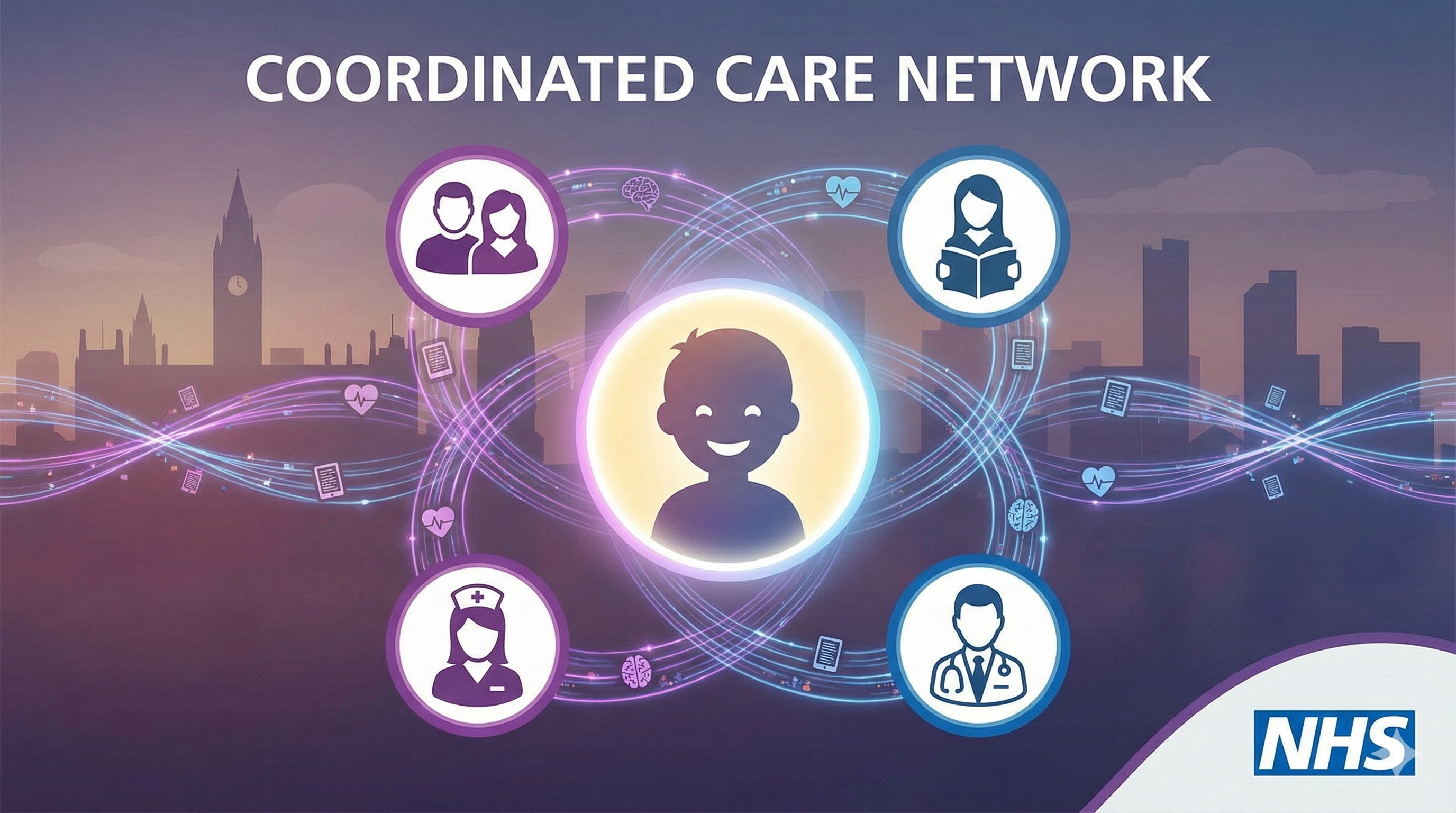
Greater Manchester ICB partnered with TinyMedicalApps to implement a comprehensive Digital Epilepsy Passport programme, designed to create seamless information flow between all those involved in a child's care.
Each enrolled child receives a personalised digital passport containing their seizure types, typical patterns and triggers, emergency medication protocols, post-seizure recovery guidance, and key contacts. Crucially, this information is co-created with the child's epilepsy nurse and updated in real-time.
The programme included an intensive school training initiative. Over 340 schools across Greater Manchester received dedicated sessions, with staff learning not just how to respond to seizures, but how to access each child's specific passport for guidance. Schools can now see exactly what a seizure looks like for each individual child and what specific steps to take.
Integration with the Greater Manchester Care Record means that when a child presents at any A&E department in the region, clinicians can immediately access their passport. This includes crucial details like which medications have already been given, what their normal seizure duration is, and when to escalate care.
A dedicated team of Epilepsy Passport Coordinators supports families through enrollment and provides ongoing technical assistance, ensuring no family is left behind due to digital barriers.
3The Results
The impact of the programme has exceeded expectations. Emergency 999 calls for seizure-related incidents from participating schools dropped by 45% in the first year. Teachers report feeling significantly more confident supporting children with epilepsy, with 92% stating they now feel "prepared" or "very prepared" to respond to a seizure.
For families, the transformation has been profound. 67% report improved seizure control since enrollment, attributed to more consistent medication adherence and better trigger identification. The ability to share information digitally has reduced parental anxiety significantly—families no longer worry whether a new school staff member knows what to do.
Hospital data shows a 28% reduction in epilepsy-related emergency department attendances from enrolled families. When children do present, treatment is initiated faster because clinicians have immediate access to relevant history and protocols.
Perhaps most importantly, children with epilepsy are missing less school. Schools participating in the programme report a 35% reduction in epilepsy-related absences, as staff now feel confident to support children to return to class after appropriate recovery time rather than sending them home.
“Before the Epilepsy Passport, we lived in constant fear. Every time the school rang, my heart would stop. Now, Lily's teachers know exactly what to do, and I can share her passport with anyone who needs it instantly. Last month she had a seizure at her friend's house—the mum just scanned the QR code and knew exactly what to do. That peace of mind is priceless.”
What's Next
Greater Manchester ICB is expanding the programme with several innovative features. A new module allowing children to log seizure activity directly through an age-appropriate interface is being piloted, helping capture events that might otherwise go unreported.
The ICB is also developing transition pathways for young people moving to adult services, ensuring their passport evolves with them and maintains continuity of care through this challenging period.
Discussions are underway with other North West ICBs to create a regional approach, ensuring children with epilepsy are supported wherever they travel across the North West of England.